Documentation is part of the job
Kitchen managers, insurers, and authorities having jurisdiction ask for evidence. If your crew cleaned the system but the photos live on a personal phone — or never got taken — you will scramble the next time someone asks for proof.
HoodCleaningDispatch is software for organizing that workflow. It does not replace a qualified service provider or the AHJ.
Minimum capture checklist
Before work starts
- Site name, address, and on-site contact
- Hood / duct / fan scope agreed for this visit
- Access path (roof hatch, keys, alarm codes, parking)
- Known deficiencies from the prior visit
During / after the clean
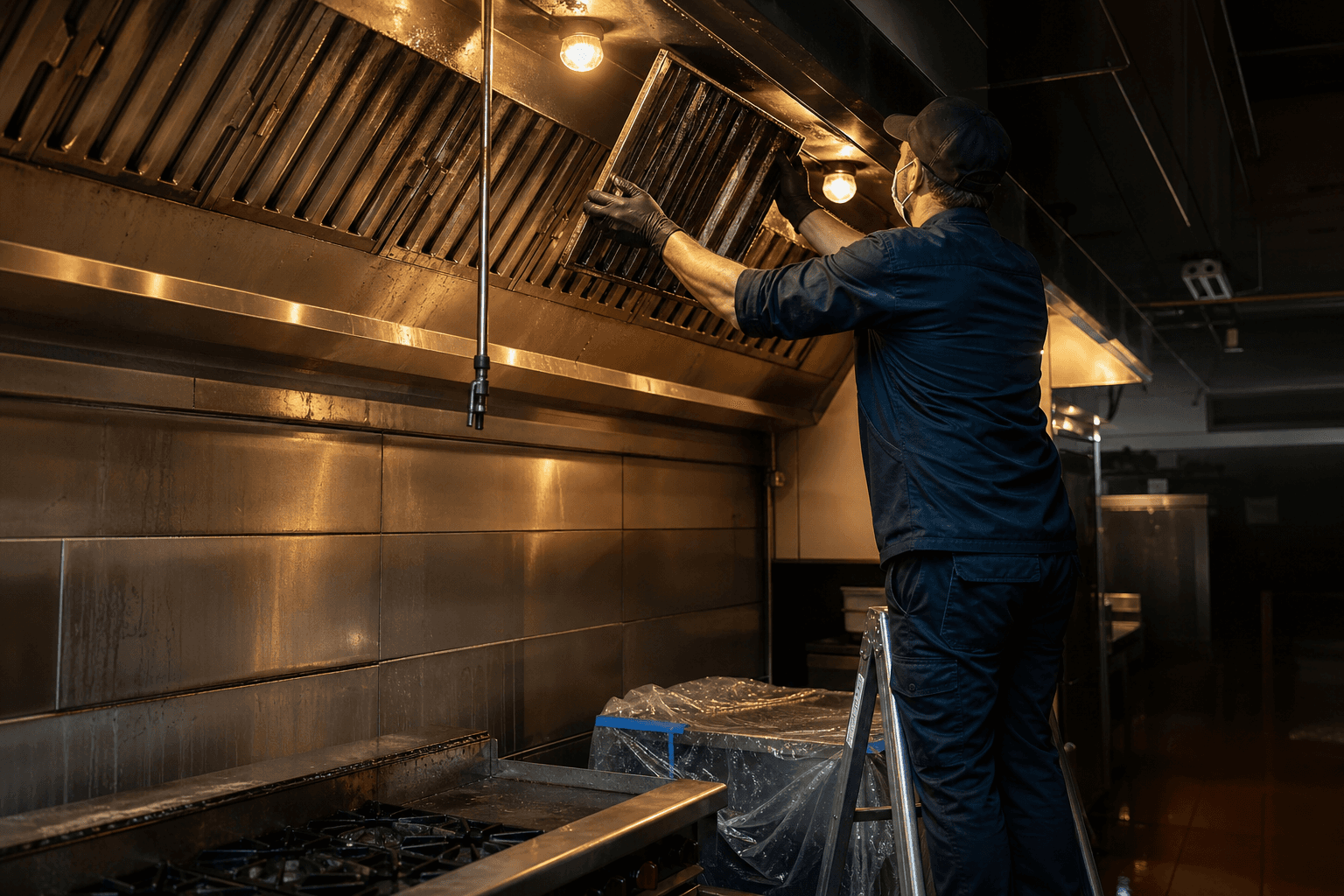
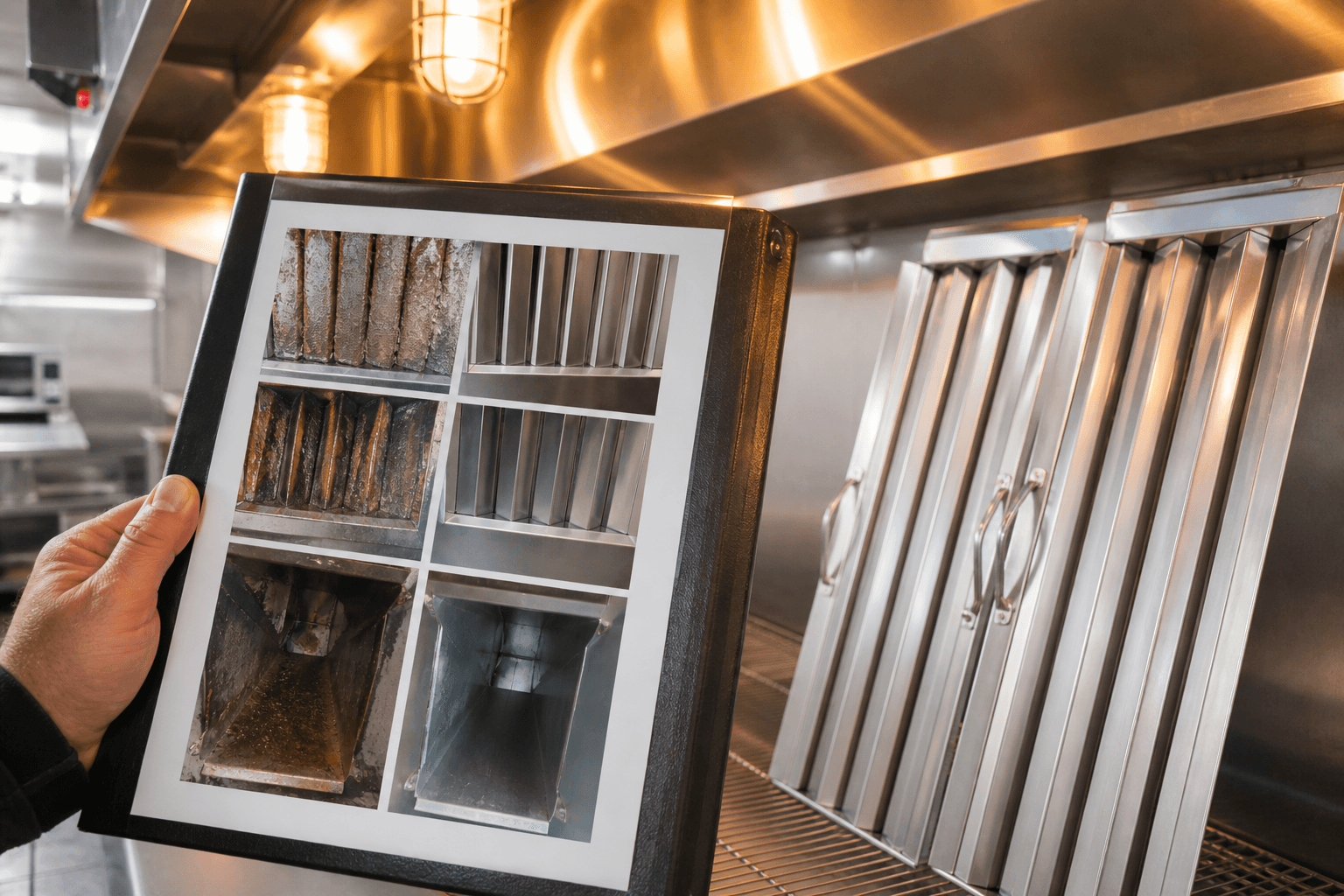
- Timestamped before-and-after photos of included surfaces
- Notes on grease depth, accessibility issues, and incomplete areas
- Separately scoped items (fire-suppression inspection, structural repairs)
- Next recommended service window based on observed buildup
Handoff
- Confirmation to the customer with the service record attached
- Job closed with photos and notes on one record — not scattered texts
Why photo gates help
Crews move fast overnight. A required photo step before “job complete” is the difference between a downloadable audit trail and a week of digging through camera rolls. Operators who enforce photo gates report fewer insurance and customer disputes.
How Daniel fits
Daniel collects intake details on the call so the job record already has address, access, and urgency before the truck rolls. After the clean, reminders for the next service return to the queue instead of dying in a spreadsheet.