The quote-to-job gap
Restaurant managers call about hood cleaning when something triggers urgency: a failed inspection, visible grease above the fry line, a new GM who inherited a deferred schedule, or an insurer asking for service records. They are ready to book — not to leave a voicemail and wait three days for a callback with a quote.
If your intake process requires "we'll have someone call you back with pricing," you lose the job to the operator who confirms scope, access window, and next available crew on the first call.
What a quote call must capture
A hood cleaning quote is not a flat rate pulled from a spreadsheet. Useful intake covers:
Scope and equipment
- Hood run length and number of hoods
- Duct configuration (vertical, horizontal, fan on roof vs. inline)
- Cooking equipment type: fry-heavy, charbroiler, wok line, bakery
- Whether filters, fans, and access panels are included in this visit
Access and timing
- Kitchen close time and earliest start window
- Roof hatch, mechanical room, or alley access
- Key codes, alarm instructions, on-site contact
- Whether the restaurant can shut down a line or needs full overnight access
Urgency classification
- Health inspection deadline (hard date)
- Insurance or franchise audit requirement
- Routine maintenance based on observed grease buildup
- Post-incident cleaning after a small fire or suppression discharge
Miss any of these and your crew arrives underinformed — or cannot get on the roof at 1 AM.
Same-week booking mechanics
Converting a quote call into a same-week job requires three things working together:
- Real crew availability. Not a calendar placeholder — actual overnight slots with a truck, techs, and equipment assigned.
- Scope confirmation on the call. Enough detail to generate a defensible price range without a site visit for standard jobs.
- Deposit or authorization before hang-up. Restaurants that call on Monday about a Friday inspection deadline will book whoever locks the slot first.
Operators who run recurring routes have an advantage: they already know the hood length, access path, and grease accumulation rate for returning clients. A quote call from an existing account should take under two minutes — confirm scope, confirm next overnight window, done.
New accounts need more intake, but the same principle applies: capture everything on the first call so the night crew is not calling the manager back at midnight for roof access codes.
Pricing tiers that close on the phone
Presenting a clear price structure during intake reduces negotiation and speeds booking:
| Job Type | Typical Range | Booking Window |
|---|---|---|
| Standard single-hood restaurant | $400–$800 | Next available overnight |
| Multi-hood / high-volume kitchen | $800–$2,000 | Same week if access confirmed |
| Inspection deadline (under 72 hr) | Premium 15–25% | Next available slot, priority queue |
| Post-fire or suppression discharge | Scoped on call | Same-week emergency crew |
Be transparent about what is included: hood, duct, fan, filters, access panels, and documentation photos. Separately scoped items (fire suppression inspection, structural repairs, hood welding) should be flagged during intake so the quote does not surprise the customer after the job.
NFPA 96 provides the framework for cleaning frequency based on cooking volume and equipment type. Your intake questions should reference observed conditions — not just calendar intervals — so the recommended next service date is defensible when the AHJ asks.
Where AI receptionists earn their keep
Daniel answers when your office is closed and captures hood length, equipment type, access window, and urgency on the first ring. That detail lands on one job record with a price range and available crew slot — so Monday dispatch is confirming a booking, not chasing a lead.
When a restaurant calls HoodCleaningDispatch at 9 PM about a health inspection on Thursday, Daniel can:
- Classify the urgency (inspection deadline vs. routine)
- Capture hood scope and access notes
- Offer the next available overnight window
- Collect authorization or deposit via SMS
- Attach the intake record to the job before morning dispatch opens
HoodCleaningDispatch is a vertical demo of the DispatchNode workflow for commercial kitchen exhaust cleaners — not a replacement for qualified field work or AHJ compliance.
Documentation closes the loop
A booked job that produces no service record is a lost recurring contract. Every completed hood cleaning should generate:
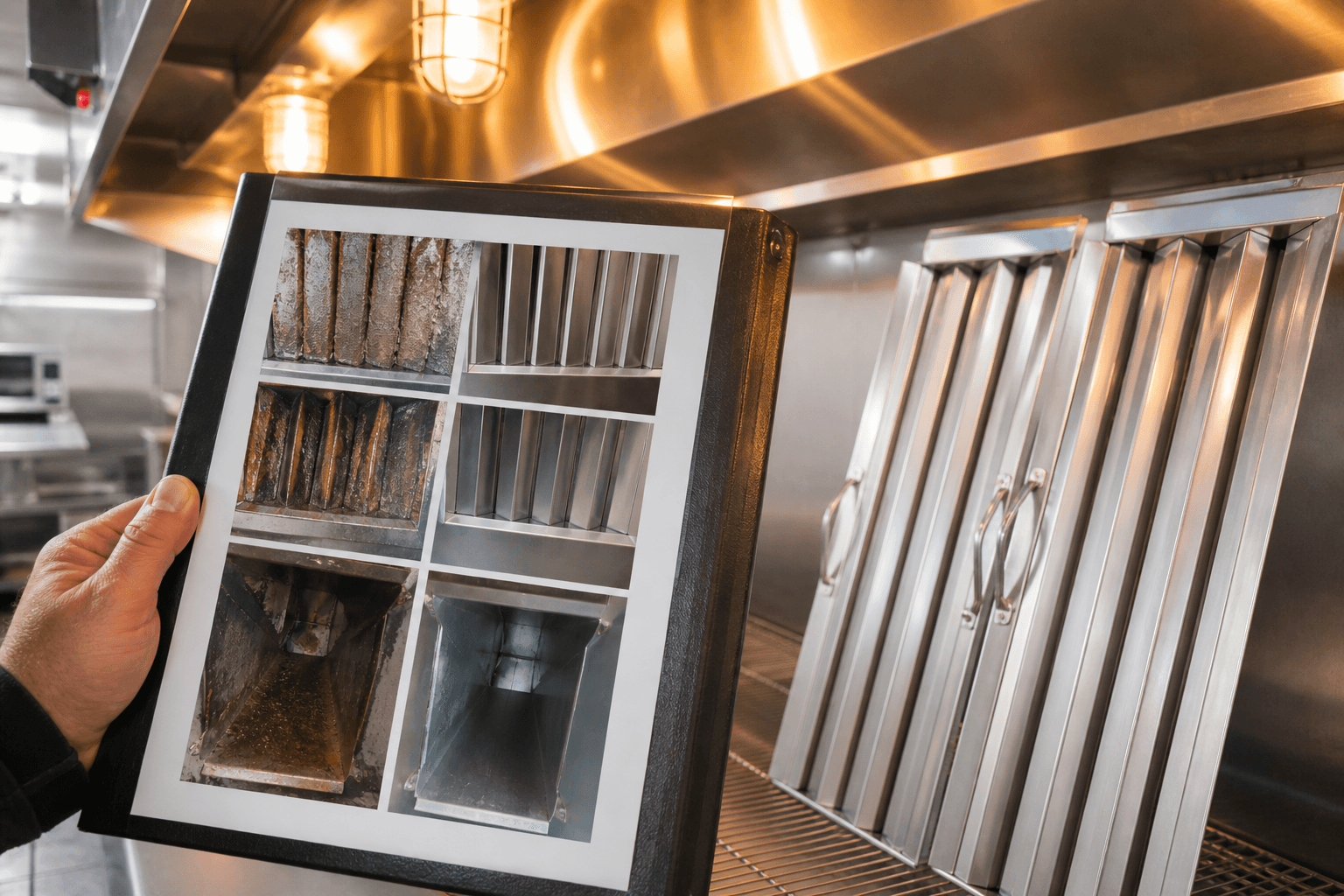
- Timestamped before-and-after photos of included surfaces
- Grease depth notes and any incomplete areas
- Next recommended service window based on observed buildup
- Customer confirmation with the service record attached
When the next quote call comes in six months later, your CRM already has the hood length, access path, and last grease depth reading. The quote takes ninety seconds and the booking closes on the first call again.
Recurring revenue from one-time quotes
Emergency and inspection-driven quote calls are acquisition events. The operator who books the same-week job and schedules the next recommended service date before hanging up converts a one-time panic call into a recurring route stop.
Build the follow-up into the workflow:
- Close the job with photos and grease depth notes
- Calculate next service date based on cooking volume and observed buildup
- Return the reminder to the dispatch queue before the due window
- Have Daniel or your dispatcher book the next overnight slot on the outbound reminder call
Recurring revenue follows from disciplined follow-up, not from hoping managers remember to dial you again.
Bottom line
Quote-to-job conversion is an answer-rate and intake-quality metric. The operators who win same-week hood work are the ones who confirm scope, quote confidently, and lock the overnight slot while the restaurant manager is still on the phone. Callback loops and voicemail are where recurring contracts go to die.